How to Build Muscle: The Complete Guide
Building muscle isn't a mystery, and it isn't luck. It runs on a handful of physiological rules that have been well understood for decades — and most people still train right past them, chasing shortcuts and marketing hype. This guide gives you the rules without the myths: what actually makes your muscles grow, how much protein you really need, which supplements are worth your money, and which aren't. Concrete, with real numbers, no BS.
Key Takeaways
- The formula: Muscle grows from progressive overload in training + enough protein (0.7–1 g per pound of bodyweight, or 1.6–2.2 g/kg) + a moderate calorie surplus (200–500 kcal) + sleep (7–9 hours) + consistency over months.
- Training: Compound lifts first, hit each muscle group twice a week, technique before weight.
- Realistic pace: Beginners build roughly 1–2 lbs of muscle per month, women about half. It doesn't go faster — no matter what the ads promise.
- Supplements: Only two are strongly backed — creatine (3–5 g daily) and enough protein (whey if needed). The rest is optional.
- Patience: First visible results show up in 8–12 weeks. Strength comes before the mirror does.
Contents
How Muscle Actually Grows
When you lift, you expose your muscle fibers to a load beyond what they're used to. That creates microscopic tears in the muscle tissue. Your body then repairs those tears — and rebuilds the fibers thicker and stronger than before. This adaptation is called hypertrophy, and it's what muscle growth actually is.
At the cellular level, a muscle is made of fibers, which are built from protein strands called myofibrils. Their smallest functional units, the sarcomeres, contract through the interplay of two proteins: actin and myosin. As a muscle grows, it lays down more of these contractile proteins. That's exactly why adequate protein intake isn't optional: no building blocks, no repair — no repair, no growth.
The order of the levers matters. The stimulus comes from training, the building blocks from your diet, and the growth itself happens during recovery. Drop any one of the three, and the whole process stalls.
The Three Levers of Muscle Growth
Drop one, and the whole process stalls.
Stimulus, building blocks, recovery — only together do they create hypertrophy.
Training: The Stimulus That Starts It All
The Core Training Principles
Progressive overload. The principle everything else hangs on. Your muscles only adapt when you keep pushing them past their usual limit — through more weight, more reps, or more sets over time. Train the exact same way week after week, and your body has no reason to grow.
Frequency and volume. Hit each major muscle group at least twice a week. As a guideline, aim for 10–20 hard sets per muscle group per week — that's the range where most people get the most growth.
Periodization and variation. Structure your training in phases (for example, with a split routine) and vary your exercises, reps, and intensity. This prevents plateaus and lowers injury risk — without reinventing the wheel every week.
How to Train for Your Goal
| Goal | Reps | Sets / muscle / week | Rest | Intensity |
|---|---|---|---|---|
| Maximal strength | 1–5 | 10–15 | 3–5 min | 85–100% 1RM |
| Muscle growth (hypertrophy) | 6–12 | 10–20 | 1–2 min | 65–85% 1RM |
| Muscular endurance | 15+ | 10–15 | 30–60 sec | under 65% 1RM |
1RM = the weight you can lift exactly once with good form. For pure muscle growth, the hypertrophy range is home base — use the other two as deliberate accents.
Compound vs. Isolation Exercises
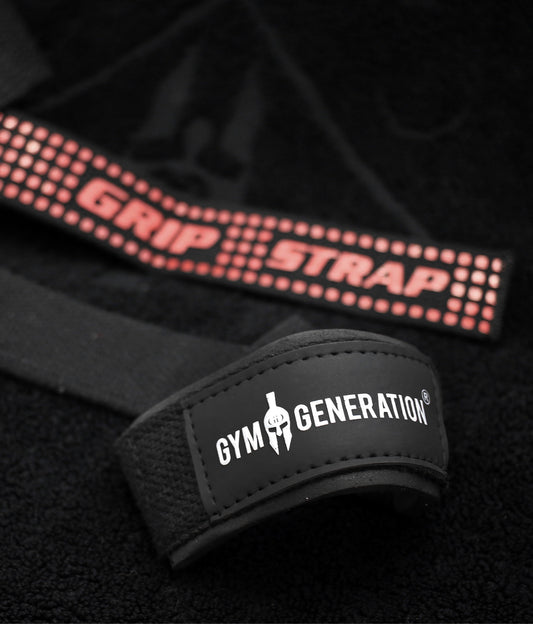
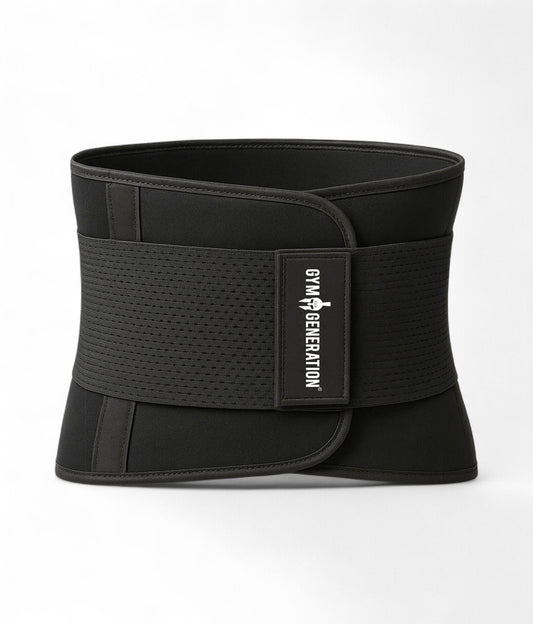
Compound exercises work several muscle groups and joints at once: squats, deadlifts, bench press, pull-ups, overhead press. They deliver the biggest growth stimulus, build the most total strength, and belong at the start of every session. On heavy compound lifts like squats and deadlifts, a lifting belt gives your core extra support — you'll find gear like that in our training accessories.
Isolation exercises target a single muscle: biceps curls, triceps extensions, leg extensions. They're ideal for bringing up weak points and shaping individual muscles. A solid plan combines both — compounds first, isolation after.

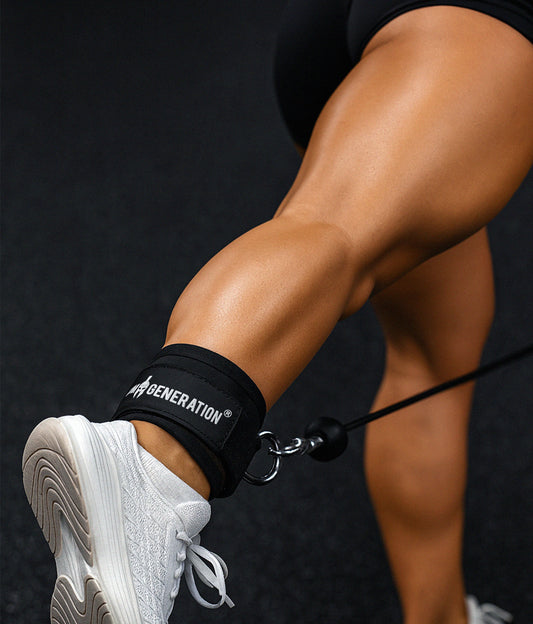
Need the right gear to train in? Check out the stringers from Gym Generation.
Technique Over Ego: Lift It Right
The weight on the bar doesn't decide your muscle growth — the tension in the muscle does. Heave a rep up with momentum, half a range of motion, and a rounded back, and you're training your ego, not your body. Clean technique isn't a beginner topic you eventually leave behind. It's the lever that decides, over years, whether you grow or get hurt.
Full range of motion. The muscle grows across the whole movement, not just the top quarter. A deep squat builds more leg than three shallow ones. Go as deep as your mobility allows with good form, and finish every rep under control.
Tension, not swing. The target muscle should move the load, not momentum. Lower the weight under control — two to three seconds — instead of dropping it. The eccentric (lowering) phase is where a big chunk of the stimulus lives.
When form breaks, the set is over. The moment your technique falls apart — back rounding, shoulder hiking, reps turning into heaves — the productive part of the set is done. Two grinded-out extra reps with bad form don't buy you growth; they buy you an injury layoff.
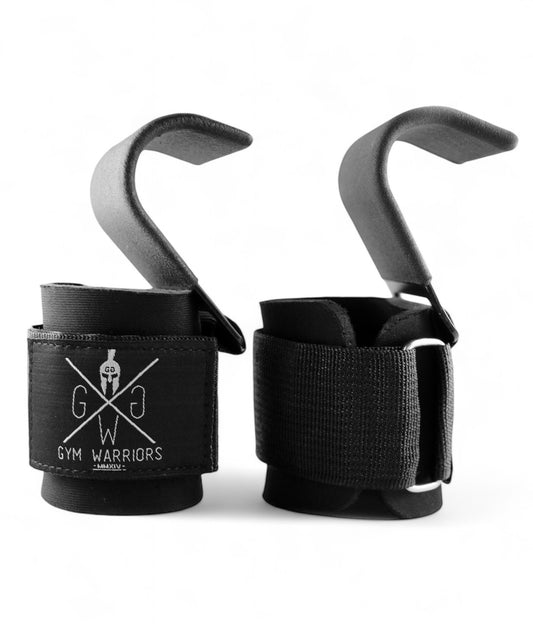
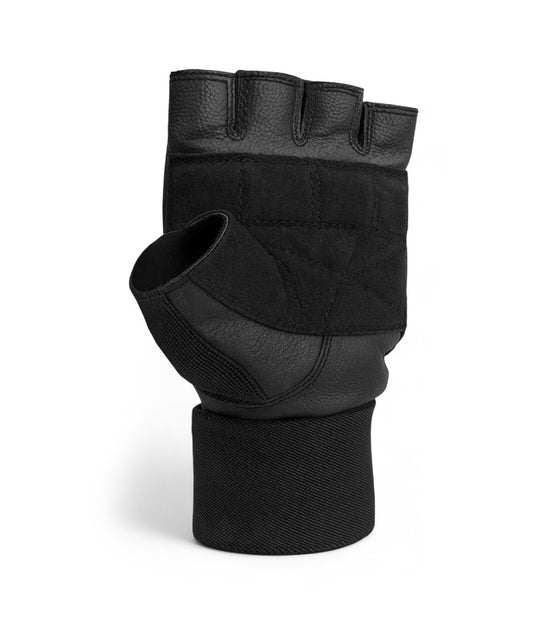
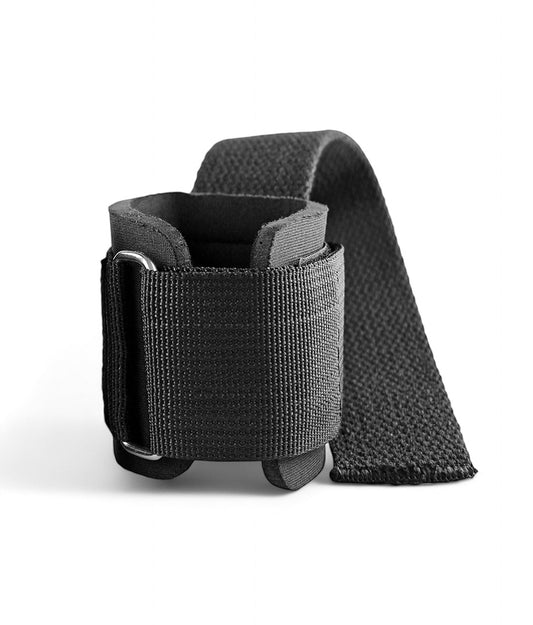
On heavy pressing — bench, overhead press — wrist wraps protect the joint and stabilize the bar at lockout. And when you're learning a new lift: drop the weight dramatically and film yourself from the side. What feels right and what looks right are two different things — and only the camera doesn't lie.
Nutrition: The Building Blocks
Calories and Macros
To build muscle, you need a moderate calorie surplus — roughly 200–500 kcal above your daily maintenance. More than that mostly turns into fat, not muscle. From there, the split of your macronutrients is what matters:
| Macronutrient | Daily amount | Role in muscle growth |
|---|---|---|
| Protein | 0.7–1 g per lb (1.6–2.2 g/kg) | Building block for repairing and growing muscle fibers |
| Carbs | 1.5–2.5 g per lb (more on high-volume days) | Training fuel; refills glycogen stores |
| Fat | 0.4–0.5 g per lb | Hormone production, including testosterone |
Example for a 180 lb lifter: around 125–180 g of protein, with carbs and fat filling out the rest until total calories sit in a slight surplus. For carbs, lean on complex sources like whole grains, oats, rice, and potatoes; for fats, on unsaturated sources like nuts, seeds, avocado, and fatty fish.
The Micronutrients That Matter Most for Lifters
Vitamins and minerals don't build muscle directly, but a deficiency can quietly stall your progress. These are the most relevant for people who train:
| Nutrient | Role in training | Good sources |
|---|---|---|
| Magnesium | Muscle and nerve function, fewer cramps | Nuts, seeds, whole grains |
| Zinc | Testosterone, immune system, recovery | Meat, seafood, seeds |
| Iron | Oxygen transport, endurance | Red meat, legumes, leafy greens |
| Vitamin D | Hormones, bones, strength | Sunlight, fatty fish, supplement |
| Calcium | Muscle contraction, bone health | Dairy, leafy greens |
| B vitamins | Energy metabolism, nerve function | Whole grains, meat, eggs |
Eating Around Your Workout
Before: one to two hours before training, eat complex carbs plus a moderate protein source — this tops off your energy stores and reduces muscle breakdown during the session. Skip heavy, high-fat meals right beforehand.
After: protein to repair muscle (whey, Greek yogurt, chicken, fish) paired with carbs to refill glycogen. The exact timing matters less than it used to be thought — what counts more is that your total daily intake adds up.
Water: even mild dehydration drags down your performance. Aim for around 3–4 liters (100–135 oz) a day, more on training days.
Recovery and Sleep: Where Muscle Actually Gets Built
The most common mistake is treating recovery as a break from progress. In reality, this is where the building happens. During sleep, your body repairs muscle tissue and releases more growth hormone. Seven to nine hours a night is the baseline — chronic sleep deprivation lowers testosterone, slows recovery, and stalls your growth directly.
Stress plays in too. Chronically high cortisol promotes muscle breakdown and blunts protein synthesis. You don't need to become a yogi, but a few levers help: enough sleep, a training load that matches your recovery, and one or two deliberate ways to wind down — a walk, breath work, or a real rest day. Active recovery like light stretching or easy cardio boosts circulation and speeds recovery further.
Supplements: What Actually Works — and What Doesn't
Supplements are an add-on, not a foundation. You build muscle with training, nutrition, and sleep — not powder. Once that base is in place, a handful of products have real scientific backing. Here's the honest breakdown:
| Supplement | Dose | Evidence | What for |
|---|---|---|---|
| Creatine monohydrate | 3–5 g daily | Very strong | More strength, size, and training performance |
| Whey / protein powder | as needed to fill the protein gap | Strong (as a protein source) | Hitting your protein target conveniently |
| Caffeine | 3–6 mg/kg, ~45 min pre-workout | Strong | Focus and strength output |
| Vitamin D3 | 1,000–2,000 IU (esp. winter / deficiency) | Moderate | Hormones, bones, strength |
| Omega-3 (EPA/DHA) | 1–2 g daily | Moderate | Recovery, inflammation |
| BCAAs | – | Weak | Redundant if protein intake is adequate |
Straight talk on BCAAs: if you're hitting 0.7–1 g of protein per pound, your body already gets every amino acid it needs from food. A separate BCAA supplement won't move the needle — that money is better spent on a quality protein source.
What to look for in a supplement: quality from reputable manufacturers, a scientific basis rather than big marketing claims, and sticking to the recommended dose. When in doubt, or if you have a pre-existing condition, check with a doctor first.
How Fast Can You Really Build Muscle?
The most honest answer you'll find online — because it isn't trying to sell you anything: building muscle is slow, and it gets slower over time. Realistic numbers under good conditions:
| Training experience | Realistic rate (men) | Women |
|---|---|---|
| Beginner (0–1 year) | ~1–2 lbs of muscle / month | about half |
| Intermediate (1–3 years) | ~0.5–1 lb / month | about half |
| Advanced (3+ years) | a few lbs per year | about half |
Beginners see the fastest progress — the so-called "newbie gains." The closer you get to your genetic ceiling, the harder you work for every pound. Anyone promising more than that is selling you something. The real lever isn't intensity for a few weeks — it's consistency over years.
Common Mistakes That Cost You Progress
No progressive plan
Same weights, same reps, every week. No increase means no stimulus.
Not enough protein
By far the most common nutrition mistake. No building blocks, no growth.
Ego over technique
Too much weight, half a rep — maximum injury risk for minimal stimulus.
Underrating recovery
Hammering the same muscle group every day slows you down instead of speeding you up.
Impatience
Switching programs after three weeks because "nothing's happening." Growth takes months, not weeks.
Frequently Asked Questions
How much protein do I need to build muscle?
For optimal muscle growth, aim for 0.7 to 1 gram of protein per pound of bodyweight per day (1.6–2.2 g/kg). For a 180 lb lifter, that's roughly 125 to 180 grams. More gives no added benefit; significantly less slows your growth.
How fast can you realistically build muscle?
Under good conditions, beginners build about 1 to 2 pounds of muscle per month, women about half. It slows down noticeably as you gain training experience. Anyone promising more is selling you something.
How long before you see results?
With clean training and the right nutrition, most people see noticeable changes within 8 to 12 weeks. Strength gains often show up sooner than visible size.
Can you build muscle and lose fat at the same time?
Yes — especially as a beginner, after a training break, or if you carry higher body fat. This effect is called body recomposition and gets harder over time. Advanced lifters usually do better separating muscle-gain and fat-loss phases.
How many times a week should you train?
Three to five sessions a week is ideal. More important than the raw number: hit each muscle group at least twice a week — that stimulates more growth than a single very hard day.
Do I need supplements to build muscle?
No. You build muscle with training, nutrition, and sleep. The ones with solid backing are mainly creatine (3–5 g daily) and protein powder as a convenient gap-filler. The rest is optional.
Compound exercises or machines — which is better?
Both have their place. Compound lifts like squats, deadlifts, and bench press deliver the biggest stimulus and belong at the start. Machines and isolation exercises add targeted work for individual muscles.
How important is sleep for muscle growth?
Very important. Most of the repair and growth happens during sleep. Seven to nine hours a night is the baseline — too little lowers testosterone and slows recovery.
What's the fastest way to build muscle?
By getting four levers right at the same time: progressive overload in training, enough protein, a moderate calorie surplus, and enough sleep. Drop one, and it bottlenecks the others — no matter how hard you train.
Gear Up for the Work
You've got the plan — now for the gear that trains with you every day. Built well, built to last, made for men who take it seriously.
About Gym Generation
Since 2013, we've outfitted men who live by discipline. This guide distills over a decade of experience with serious lifters and the current state of training science. We don't sell miracles — we give you the knowledge and the gear for the work that actually pays off.
Note: This article is for general information and isn't a substitute for individual medical or nutritional advice. If you have a pre-existing condition or injury, or before taking any supplement, talk to a doctor. Last updated: June 2026.