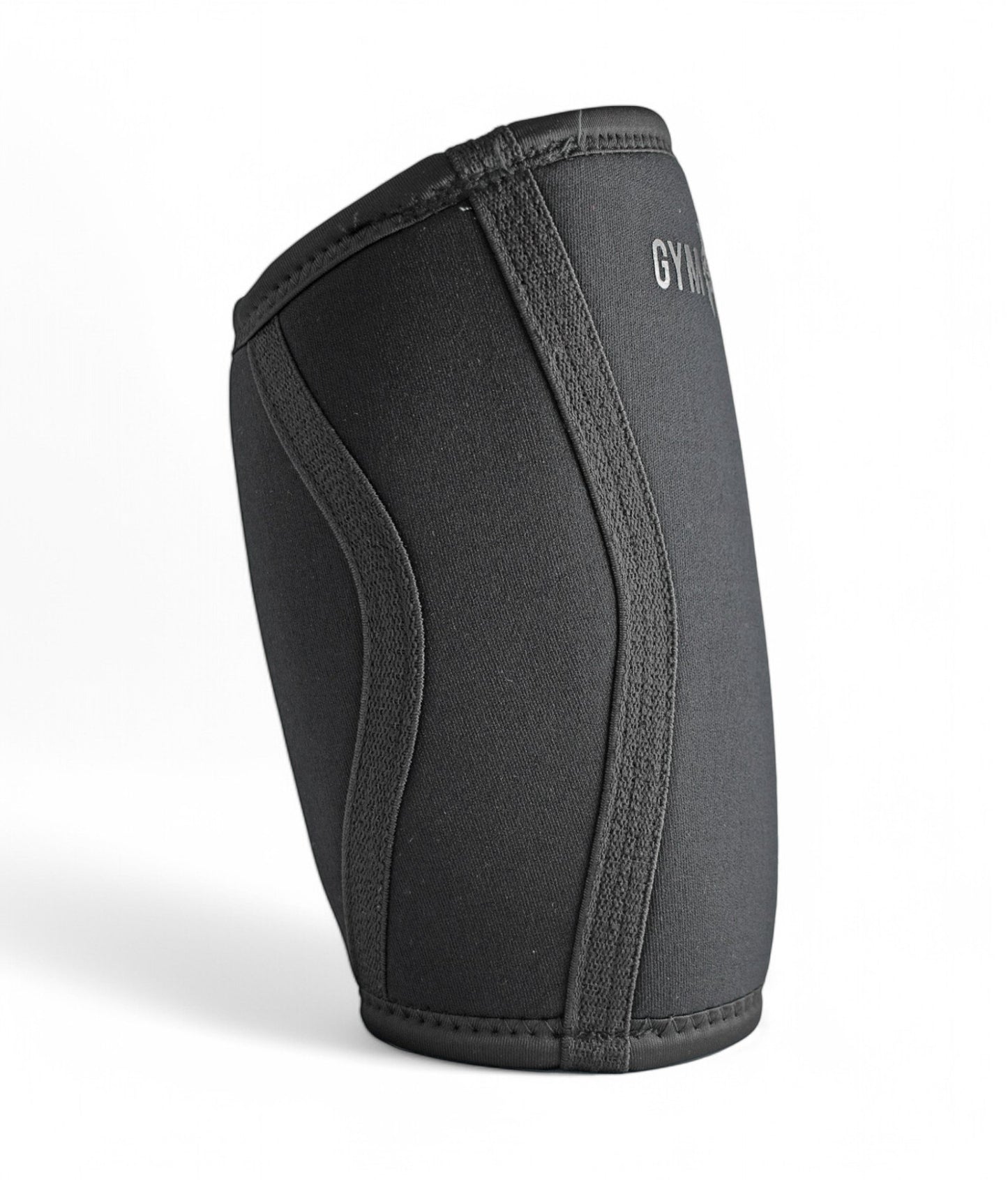
Knee Sleeves 7mm Neoprene - Black
Knee Sleeves 7mm Neoprene - Black
In stock
Couldn't load pickup availability
 @gymgeneration
Lookbook
@gymgeneration
Lookbook
Knee Sleeves 7 mm Neoprene – Pull-On Knee Support
The Gym Generation knee sleeves are 7 mm neoprene, supplied as a pair. You pull them on like a sock, the neoprene lays firm compression around the knee and keeps the joint warm. A structured side panel and zigzag-stitched, bound edges give the sleeve its shape: it stays put and does not slide down over long sessions. 7 mm is the heavier gauge in strength training – noticeably more resistance out of the bend than thinner 5 mm models. Four sizes from S to XL, height 23 to 26.5 cm, measured 10 cm below the kneecap. Made for squats, leg press, bodybuilding and heavy leg work.
Knee support for strength training, bodybuilding and fitness – compression and warmth wherever the knee works under heavy load. Developed by Gym Generation, a Swiss brand for training and strength gear since 2013.
Finding the Right Size
With knee sleeves the size decides the effect. One that sits too loose gives almost no compression; one that is too tight constricts. Measure like this:
- Stand up and bend the knee slightly – not locked straight.
- Measure the circumference of your leg about 10 cm below the kneecap.
- Find your figure in the table.
The ranges overlap on purpose, because neoprene stretches and there are genuine borderline cases. If you fall in an overlap, take the smaller size for maximum compression and the larger one if getting them on and a slightly easier feel matter more. One more thing that causes a lot of wrong orders in this category: not every brand measures at the same place. We measure 10 cm below the kneecap, others work from the mid-knee circumference. The centimetre ranges look similar but do not mean the same thing. Measure again when you switch brands.
What 7 mm Does at the Knee
The gauge of the neoprene decides how much resistance you get. At 7 mm these sit above the common 5 mm standard: the material pushes back noticeably as you bend and gives the joint something to work against rather than just keeping it warm. You feel it most in the bottom of the squat, where the sleeve is stretched hardest and works back accordingly. The thicker layer also holds the knee considerably warmer, which is what counts in a cold gym or on an early leg day.
7 mm or 5 mm – Which Gauge Suits You
5 mm is the thinner, more mobile option and suits mixed training with high reps and quick exercise changes. 7 mm gives more compression and more push-back and is built for heavy leg work, where you want stability in the deep position. If your training is built around squats, leg press and heavy volume, 7 mm is the better gauge. If you move through changing exercises all session and want maximum freedom, thinner material serves you better.
Higher at the Front, Lower at the Back
These sleeves are not cut as a straight cylinder. They are tallest at the front over the kneecap, 23 cm on S up to 26.5 cm on XL, and taper down towards the back of the knee. There is a practical reason: in a deep squat, material otherwise bunches behind the knee and creases, particularly in thicker 7 mm neoprene. Less height at the back means less bunching, while the full coverage stays at the front over the kneecap, where the compression counts.
Why They Do Not Slide Down
Plenty of neoprene sleeves migrate downwards over long, sweaty sessions and need pulling back up. The construction is what prevents it here: a structured side panel runs along the shaping seam, holding the sleeve's form and stopping it from concertinaing as you bend. On top of that, the top and bottom edges are finished with a separate binding and secured with a zigzag seam that flexes rather than splitting. With the right size chosen, the sleeve sits in the same place from the first set to the last.
Putting Them On
7 mm sleeves go on tight – that is part of it and normal at this gauge. Pull them up over the foot and roll them onto the knee from below, bit by bit, rather than yanking at the hem. New sleeves are tighter than they will be later; the neoprene gives marginally with time. They are meant to be snug: a sleeve you can slip on easily is barely compressing anything. So do not size up just because it makes them easier to put on.
Knee Sleeves – Frequently Asked Questions
Which size do I take?
Bend the knee slightly and measure your leg circumference 10 cm below the kneecap, then check the table: S 33 to 36 cm, M 35 to 38 cm, L 37 to 40 cm, XL 39 to 43 cm. The ranges overlap on purpose. If you fall between, take the smaller size for maximum compression and the larger one if easy fitting matters more to you.
I wear M in another brand – does M fit here?
Not automatically. We measure 10 cm below the kneecap; other makers work from the mid-knee circumference. Two different points on the leg give two different numbers, even when the tables look alike. Measure again when you switch and compare your figure with our chart.
Knee sleeves or knee wraps – what is the difference?
A sleeve is a closed neoprene tube: pull it on and you have constant compression for the whole session. A knee wrap you wind yourself and adjust set by set, tighter for the heavy work, looser for volume. Sleeves are the everyday tool for leg day, wraps the specific tool for heavy singles. Plenty of lifters own both.
Do they slide down on long sessions?
No. The structured side panel and the bound, zigzag-stitched edges hold the sleeve in shape, so it does not concertina as you bend or wander downwards. The condition is the right size – a sleeve that is too big slides in any material.
Can I wear them in competition?
For training, the gym and any competition without an equipment list, without restriction. Under IPF powerlifting rules the limit for knee sleeves is 7 mm, so these sit exactly at the permitted maximum – but the IPF only allows brands on its own approved list, and Gym Generation is not on it. Weightlifting under IWF rules has no brand approval; there, what matters is that the sleeve contains no buckles or reinforcements. Always check the current rulebook for your competition before you enter.
Are knee sleeves worth it in strength training?
On heavy leg work, yes. They give firm compression, keep the joint warm and make the deep position of the squat feel more stable. Warm-ups and light sets do not need them, and training part of your sets without keeps the muscles around the knee working. If you already have knee problems, speak to a doctor or physiotherapist rather than covering them up with a sleeve.
Are they supplied as a pair?
Yes, you get two sleeves – a pair for both knees. Worth checking when you compare with other brands: some sell theirs singly.
How do I care for them?
Air them out after training and let them dry naturally – not on a radiator and not in the tumble dryer. Hand wash with a mild detergent when needed. That keeps the neoprene and its compression intact, and keeps the smell down.