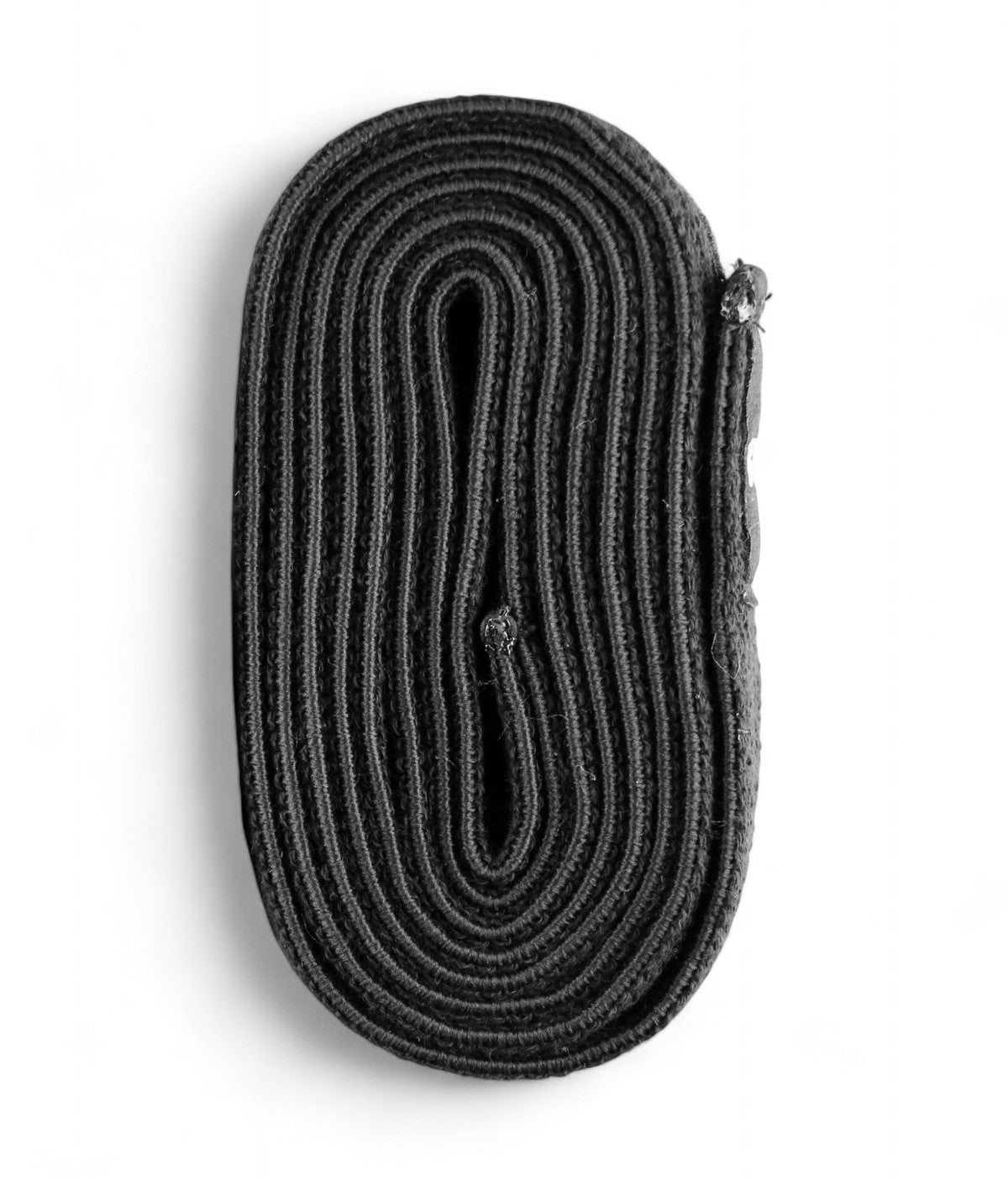
Knee Wraps for Weightlifting
Knee Wraps for Weightlifting
In stock
Couldn't load pickup availability
 @gymgeneration
Lookbook
@gymgeneration
Lookbook
Knee Wraps for Strength Training – 190 cm, Wound by Hand
The Gym Generation knee wraps are 190 cm long and 8 cm wide, in 50% elastic and 50% cotton, fixed with a Velcro closure. You wrap them yourself and set the tension: tight for heavy squats, looser for controlled working sets. The elastic stores tension as you descend and gives it back on the way up, which makes the bottom of the squat more stable. Made for squats, leg press, weightlifting and powerlifting. Supplied as a pair in black with the Gym Generation logo.
Knee support for strength training, bodybuilding, powerlifting and weightlifting – wherever the knee works under repeated heavy load. Developed by Gym Generation, a Swiss brand for training and strength gear since 2013.
Tension You Dial In Per Set
Because these are wound rather than pulled on, you decide the level of support set by set. Between the 190 cm of length, the number of layers and how hard you pull, you can go from light support to properly tight. Firm for the heavy sets, looser for volume work, off between exercises. That is the difference to a sleeve, which sits the same whatever you are lifting.
The Elastic Rebound Out of the Hole
As you descend into the squat, the wound elastic stretches and stores tension. At the bottom, where the lift is hardest, it releases that tension and helps on the way up. That is what knee wraps are built for in strength sport: not just hold, but work with the movement. The tighter you wrap, the stronger the effect.
190 x 8 cm – What the Dimensions Mean
190 cm gives you enough material for four to six layers around the knee, depending on leg size and how firm you want it. The 8 cm width covers the kneecap and the joint line properly and spreads the pressure over an area instead of biting at one point. This combination is the standard people work with in strength training.
How to Wrap Them
Start just below the kneecap with the knee slightly bent and spiral upwards, each layer overlapping the last by about half, over the kneecap and onto the lower thigh, then fix the end with the Velcro. For more firmness, cross the wrap over and under the knee in a figure of eight, which binds the kneecap more tightly. What matters is even tension across all the layers, with no single point pulling harder than the rest.
Knee Wraps – Frequently Asked Questions
Knee wraps or knee sleeves – what is the difference?
Two tools for two jobs. Neoprene knee sleeves pull on and give constant compression and warmth across the whole session – simple, and fine for every set. Knee wraps, sometimes called knee straps, are wound and adjustable in firmness, so they sit tighter on heavy sets and give tension back out of the bottom position. Plenty of lifters use both: sleeves for general training, wraps for the heavy work.
How tight should I wrap?
Tight enough that you clearly feel the support, without the leg going numb, tingling or cold. Wrapped tight, knee wraps are meant for individual heavy sets and come off afterwards. For working sets with more reps, a moderate wrap is enough.
Should I wear them for the whole session?
No. Tightly wound wraps belong on the heavy sets, not on warm-ups and light work – and leaving part of your working sets unwrapped lets the leg keep stabilising itself. Loosen them between sets rather than leaving them on throughout. If you already have knee problems, speak to a doctor or physiotherapist rather than covering them up with a wrap.
Are shorter or longer wraps better?
It depends what you train for. Around 150 cm you get fewer layers and less firmness, which some people prefer for volume work. From 200 cm upwards you are into competition powerlifting territory – more support, but noticeably more practice needed to wrap them evenly. 190 cm sits between the two and covers most strength training.
Do they fit any leg size?
Yes. Because they are wound there are no sizes – slimmer legs simply take more layers, heavier thighs fewer. The 190 cm covers both, for men and women alike.
How do I care for them?
Hand wash with a mild detergent and air dry – not in the tumble dryer and not on a radiator, so the elastic and the Velcro keep working. Roll them loosely or leave them open to air out after training.